
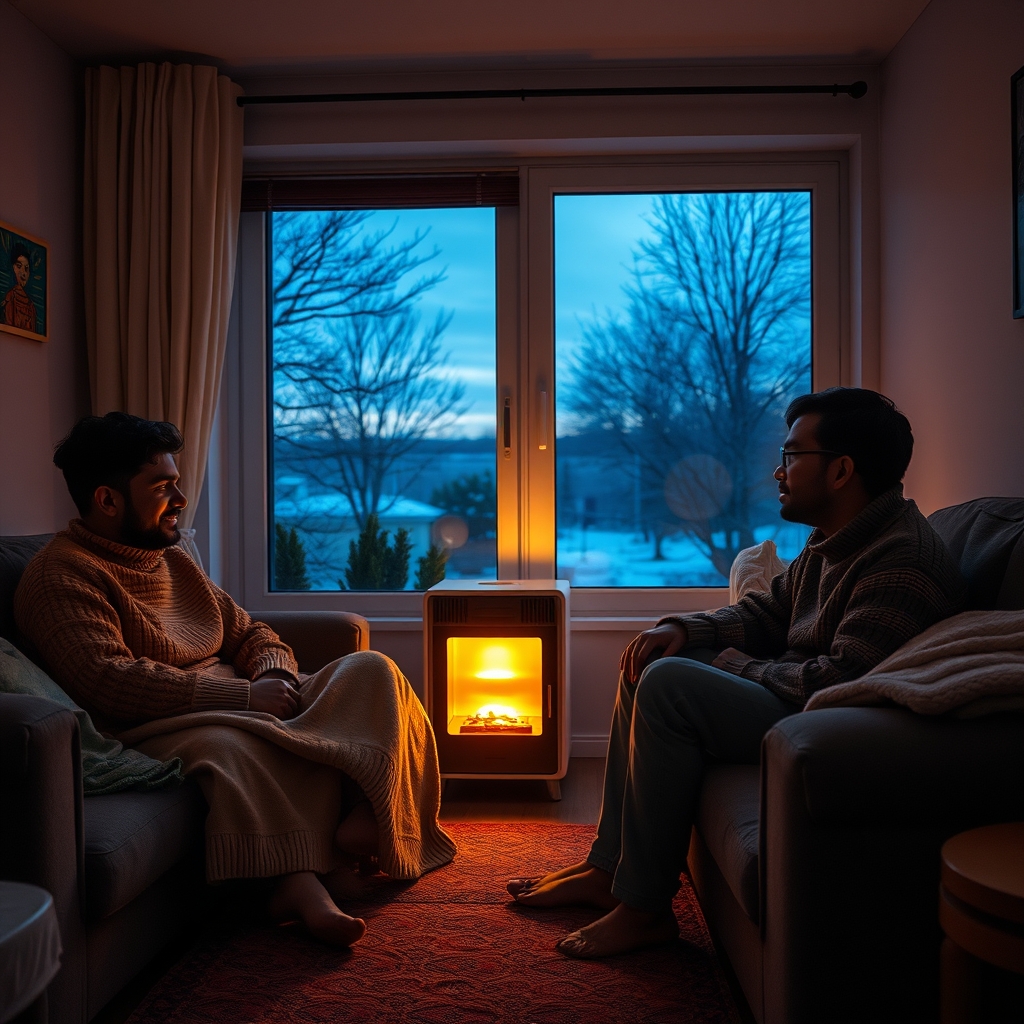
Cities like Delhi, Chandigarh, and Lucknow see temperatures drop sharply through December and January, making winter heating arrangements for shared homes a genuine necessity rather than a comfort choice. In a flat with multiple housemates, though, heaters bring the same questions ACs do in summer: what type to use, how to stay safe, and how to split the added electricity or gas cost.
Choosing the Right Winter Heating Arrangements for Your Flat
Not every heater suits every room or household. Common options for shared homes in North India include:
- Oil-filled radiators — slower to heat up but safer for long overnight use and better for larger rooms
- Fan heaters — quick warmth for small spaces, but higher power draw and best for short use
- Infrared or quartz heaters — energy-efficient for spot heating, good for someone working at a desk
- Electric blankets — low running cost for personal warmth, though not a substitute for room heating in extreme cold
Discuss as a household which type suits shared spaces like the living room versus what individuals might want in their own bedrooms.
Safety Rules Every Shared Flat Should Follow
Heaters are one of the more common causes of household electrical incidents in winter, so agree on a few non-negotiable safety habits: never leave a heater running unattended or overnight in an unventilated room, keep heaters away from curtains and bedding, avoid overloading a single socket with multiple appliances, and get old wiring checked if you notice frequent trips or warm switchboards.
Why it matters: Space heaters draw significantly more power than most household appliances, so unsafe or careless use is both a fire risk and a quick way to spike the shared electricity bill.
Splitting Winter Heating Costs Fairly
Just like summer AC costs, heating expenses shouldn't default to an equal split if usage is uneven — someone working from home all day with a personal heater running will naturally use more power than a flatmate who's out most of the day. Agree on a fair method, whether that's a usage-based estimate or a flat monthly contribution toward a shared "winter fund," and track it consistently using an expense-splitting tool so the numbers stay transparent.
Pro tip: Insulate gaps under doors and around windows with simple draft stoppers before winter peaks — it noticeably reduces how long heaters need to run to keep a room comfortable.
Coordinating as a Household
Agree on which common areas get a shared heater during peak cold hours, such as evenings when everyone's home, versus personal heaters in individual rooms. This avoids both discomfort and unnecessary duplicate spending on multiple heaters running in different rooms for the same few hours.
It's also worth agreeing on a household approach to hot water usage during winter, since geysers add another notable chunk to the electricity bill in North Indian flats. Staggering shower times where possible, using a timer instead of leaving the geyser on continuously, and flagging any unusually high bill promptly rather than waiting until month-end all help keep winter costs predictable. A short conversation at the start of the season, covering both heating and hot water habits, saves a lot of back-and-forth once the cold weather is in full swing.
Ready to find your ideal flatmate? Join FlatmatesHub today and connect with KYC-verified roommates near you — completely free.