
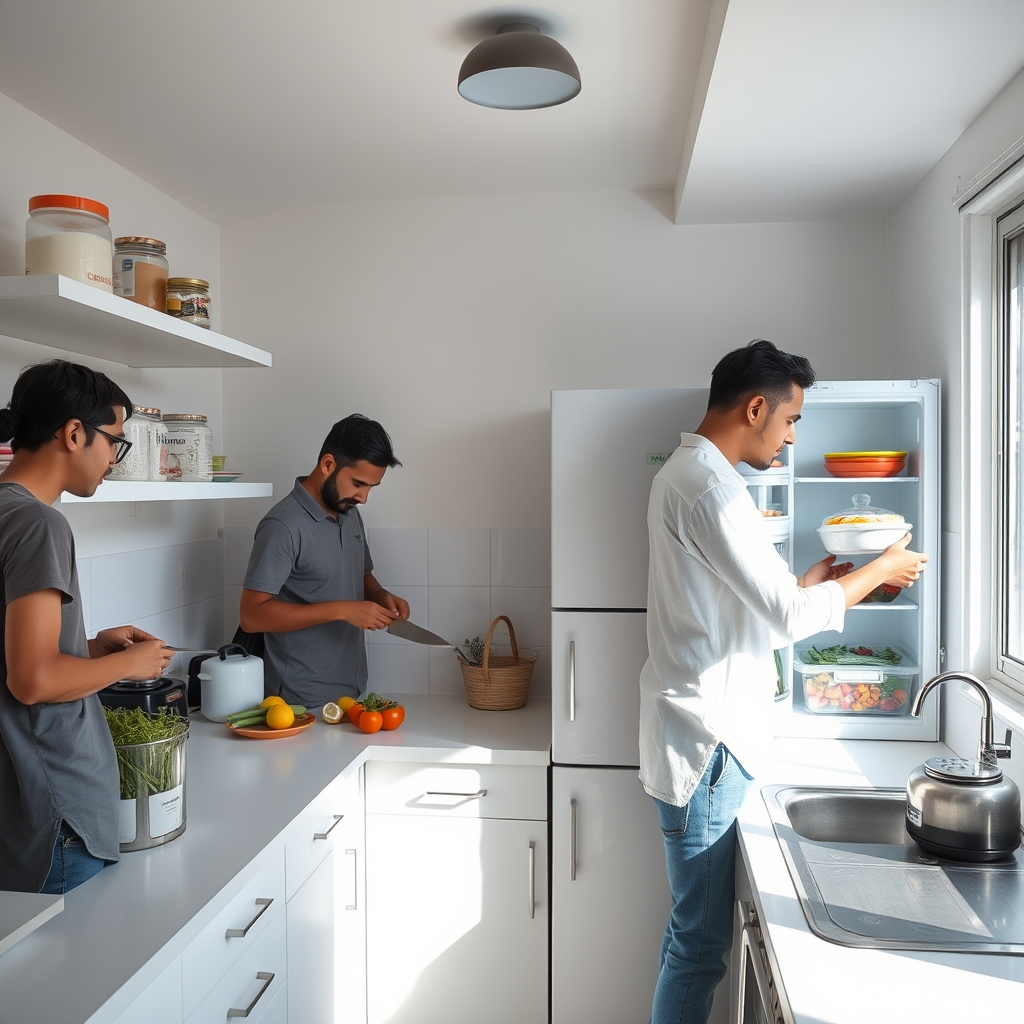
Vegetarian vs non-vegetarian kitchens is one of the most common sources of friction in shared flats across India, and it's rarely about the food itself — it's about respect, hygiene, and clear boundaries in a space everyone has to use every day. Whether you're a strict vegetarian sharing with a flatmate who cooks chicken, or a non-vegetarian worried about being made to feel guilty for your choices, a little upfront planning turns the kitchen from a battleground into a space that works for everyone.
Set Kitchen Ground Rules Early
The best time to discuss food preferences is before you move in together, not after the first awkward dinner. When you're evaluating a potential flatmate, ask directly about their dietary habits and how they expect the kitchen to be shared.
- Are separate cookware sets for vegetarian and non-vegetarian food expected?
- Should non-vegetarian food be stored in a separate section of the fridge?
- Is cooking non-vegetarian food allowed in the shared kitchen at all, or only takeout?
- Are there religious or cultural reasons behind the preference that need extra sensitivity?
Getting these answers upfront, ideally through a compatibility-focused matching process, prevents the mismatch from surfacing only after the lease is signed.
Practical Storage and Cooking Etiquette
Once you're living together, small habits make a big difference. Label shelves and fridge sections clearly, use separate chopping boards and utensils if your flatmate requests it, and always clean the kitchen thoroughly after cooking strong-smelling or non-vegetarian meals. Ventilate the kitchen well with an exhaust fan or open window, and avoid leaving raw meat or fish uncovered in a shared fridge. These aren't just courtesy measures — for many vegetarian flatmates, they're genuinely important for comfort and, in some cases, religious observance.
When Preferences Clash
Sometimes flatmates realize their food habits are simply incompatible after moving in. Rather than letting resentment build, have an honest conversation early. Some households compromise with designated cooking times, separate mini-fridges, or agreeing that non-vegetarian food is cooked only occasionally and with extra cleanup. If the mismatch is too significant to bridge comfortably, it's worth considering a change in living arrangement rather than a daily standoff.
Why it matters: Food is one of the most personal and emotionally loaded aspects of shared living, so mismatched expectations here are a leading cause of early flatmate breakups — screening for it in advance saves everyone time and stress.
Matching With Compatible Flatmates From the Start
The easiest way to avoid kitchen conflict is to find flatmates whose food habits already align with yours, or who are genuinely open to accommodating differences. Compatibility matching tools that ask about dietary preferences, cooking frequency, and kitchen-sharing expectations help filter for this before you ever meet in person, saving both sides an awkward trial period.
Pro tip: Do a short trial cooking session together before finalizing a flat share — it reveals kitchen habits and preferences far faster than any conversation.
Ready to find your ideal flatmate? Join FlatmatesHub today and connect with KYC-verified roommates near you — completely free.