
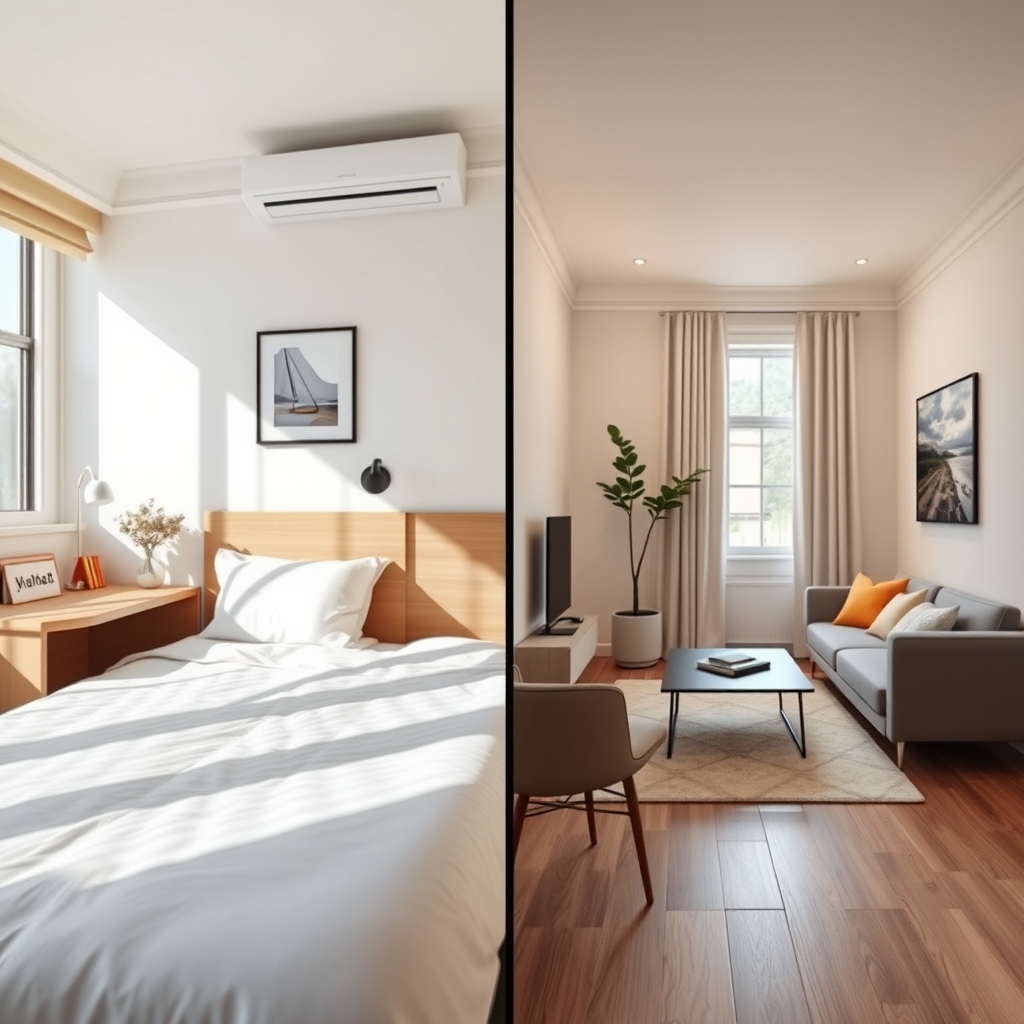
If you're relocating for work or study, one of the first big decisions you'll face is PG vs flat sharing — and the right answer depends less on which option is \"better\" and more on which fits your lifestyle, budget, and need for independence. Both are popular shared-living formats across Indian cities, but they work very differently day to day.
What sets a PG apart from flat sharing
A paying guest (PG) accommodation is typically a managed setup — a house or building run by an owner or operator, often with meals, housekeeping, and furnishing included, and usually charged per bed rather than per flat. Flat sharing, on the other hand, means you and your flatmates jointly rent an entire apartment directly from a landlord, manage your own furnishing, cooking, and chores, and split the rent and bills among yourselves.
PG vs flat sharing: comparing the essentials
- Independence: Flat sharing gives you far more control over house rules, decor, and daily routine; PGs usually come with fixed timings and house policies
- Cost structure: PGs often bundle meals and utilities into one fee; flat sharing usually means separate rent plus utilities split among flatmates
- Move-in effort: PGs are largely ready to move into; flat sharing may require furnishing, utility connections, and setup time
- Flexibility: PGs typically allow shorter stays with lower lock-in periods; flat shares usually involve a fixed lease term
- Choosing housemates: In a PG, you're placed among existing residents; in flat sharing, you can actively choose flatmates you're compatible with
When a PG makes more sense
A PG is often the better fit if you've just moved to a new city and want a low-effort, low-commitment start, or if you're a student or early-career professional prioritising convenience over control. Meals, Wi-Fi, and housekeeping being handled for you can be a real time saver in your first few months in an unfamiliar city.
When flat sharing makes more sense
Flat sharing tends to suit renters who want more privacy, a say in who they live with, and the freedom to cook their own meals or set their own house rules. It's often more economical over the long run too, especially once you split rent and bills three or four ways with flatmates you've chosen deliberately rather than been assigned.
Pro tip: If you're unsure which fits you, try a PG for your first one to three months in a new city, then move into a flat share once you've met people and understand the locality better.
Why it matters: Choosing between a PG and flat sharing is really a choice between convenience and control — knowing which one you value more upfront saves you from an uncomfortable mid-lease switch.
Either way, verify before you commit
Whether you choose a PG or a flat share, the fundamentals of a safe move stay the same: confirm the listing is genuine, meet or video-call the owner or flatmates in advance, and get all fees and rules in writing.
- Check for a verified property listing rather than trusting photos alone
- Ask about lock-in period, notice period, and refundable deposit terms
- For flat sharing, confirm your prospective flatmates through a KYC-verified profile before agreeing to move in
- Clarify what's included — Wi-Fi, meals, housekeeping, or none of the above
Ready to find your ideal flatmate? Join FlatmatesHub today and connect with KYC-verified roommates near you — completely free.