
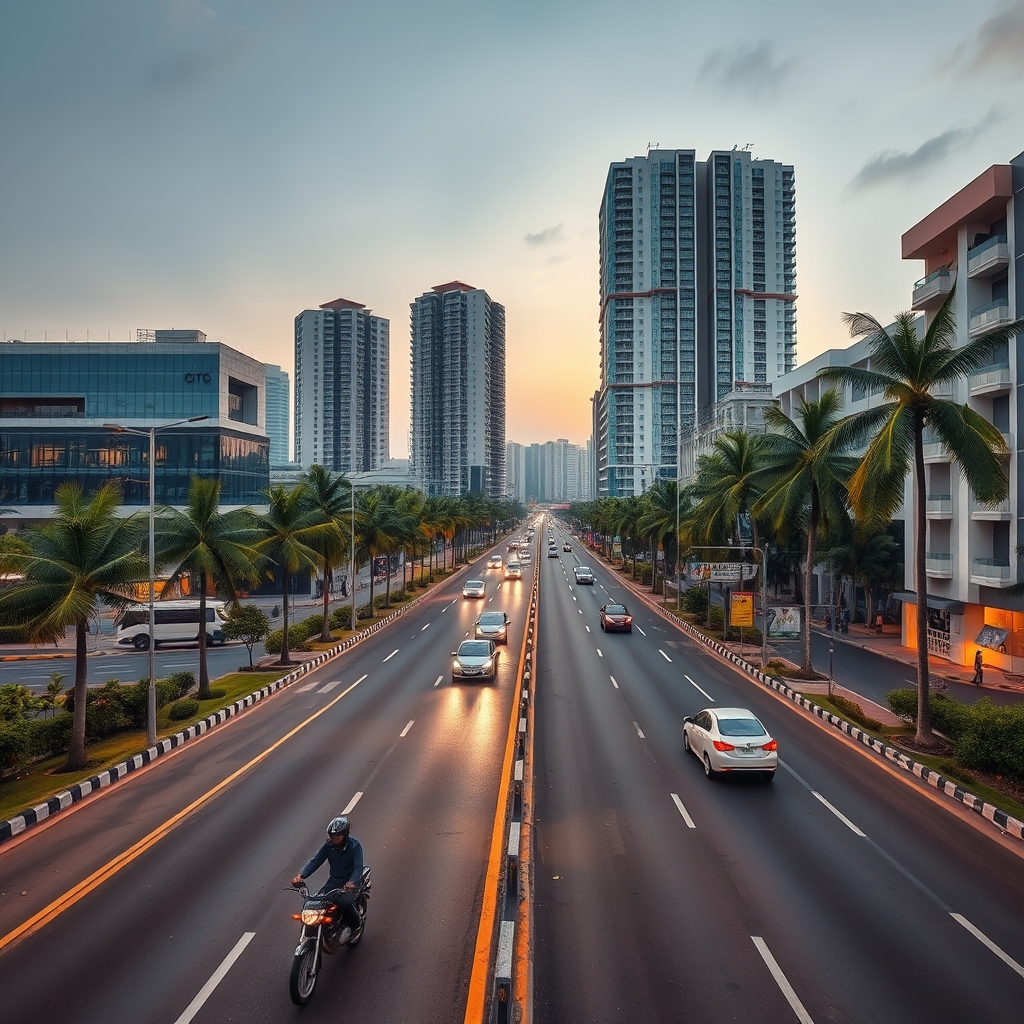
Old Mahabalipuram Road, universally known as OMR, is Chennai's answer to a purpose-built IT corridor, and it is where a huge share of the city's tech workforce ends up renting. Stretching from Sholinganallur through Siruseri and beyond, OMR is less a single neighborhood and more a long chain of localities, each shaped by its distance from the nearest tech park.
Understanding OMR's Stretch-by-Stretch Character
OMR is best understood in segments. The Sholinganallur-Perungudi stretch is the most developed, with a dense concentration of apartments, malls, and restaurants close to major IT parks. Moving further along toward Siruseri and Navalur, the area becomes newer and slightly more affordable, with large gated communities built specifically to house the influx of IT employees. Each segment has a different rent bracket, generally trending from premium near the older, established stretch to mid-range or budget-friendly as you move further from the city center.
Commute and Tech-Park Proximity
OMR's entire identity is built around its IT parks — TIDEL Park, and the numerous SEZ campuses housing major tech and BPO companies line the corridor for kilometers. For most renters here, the goal is simple: minimize commute time to a specific tech park. This makes OMR one of the few areas in Chennai where choosing the right sub-locality can save 30-45 minutes a day compared to picking the wrong one, even though both are technically "on OMR."
Who Rents Along OMR
- IT and BPO employees working at the tech parks and SEZs directly along the corridor.
- Young professionals and flatmates sharing 2BHK or 3BHK flats in large gated communities to split rent and amenities costs.
- Families who have relocated for long-term IT jobs, often opting for the more established Sholinganallur-Perungudi stretch for better schools and hospitals.
- Students and early-career renters in the more budget-friendly stretches further from the city core.
Amenities and Everyday Convenience
The established parts of OMR are well served by malls, multiplexes, hospitals, and a dense restaurant scene catering to a young, working population. Many gated communities also include their own gyms, pools, and clubhouses, which matters given OMR's limited public green space. However, amenities thin out noticeably the further you go from the main hubs, so it pays to check what's actually walkable versus what requires a cab ride.
The Trade-Offs Worth Knowing
OMR's biggest drawback is traffic — the corridor is a single main road for a huge volume of daily commuters, and peak-hour congestion is a well-known frustration for residents. Public transport, while improving, still lags behind the sheer number of people living and working along the stretch, so most renters depend on company shuttles, cabs, or two-wheelers. Flooding during heavy monsoon spells has also historically affected some low-lying pockets, so it's worth asking about drainage history before signing a lease.
Pro tip: Ask your prospective landlord or flatmates specifically how the building handled monsoon flooding in past years — OMR's low-lying stretches vary a lot in drainage quality, and this detail rarely shows up in listing photos.
Why it matters: On OMR, the difference between a smooth commute and a daily ordeal often comes down to which specific stretch you choose — proximity to your exact tech park matters more here than almost anywhere else in Chennai.
Finding a Reliable Flat on OMR
Because OMR's rental market is so segmented, verified listings save you from guesswork. FlatmatesHub shows KYC-verified properties and users along the OMR corridor, with in-app messaging to confirm commute realities directly with current residents, and expense-splitting tools to manage shared rent and utilities.
Ready to find your ideal flatmate? Join FlatmatesHub today and connect with KYC-verified roommates near you — completely free.