
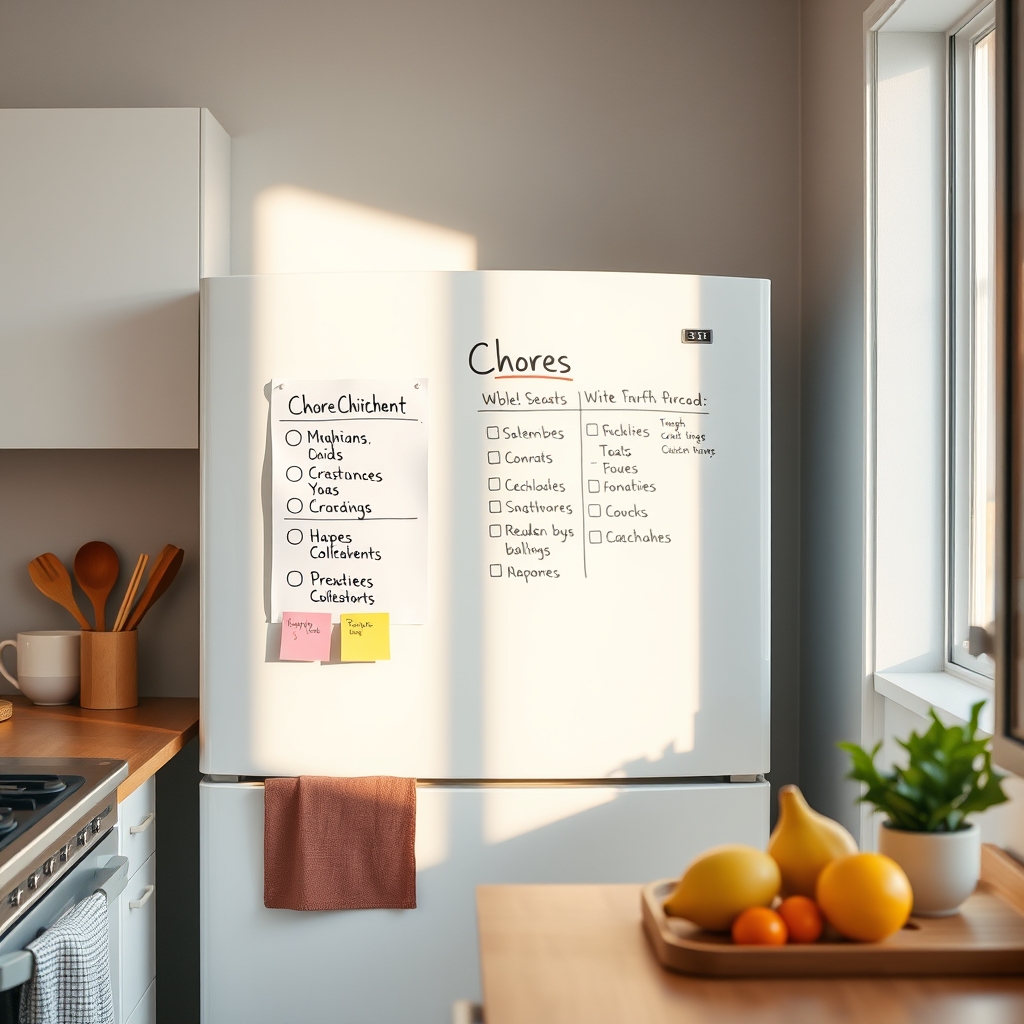
If you have ever lived with roommates, you already know that dishes in the sink and overflowing trash bins are usually not a sign of laziness — they are a sign of a missing system. Learning how to create a chore chart that actually works is one of the simplest ways to prevent the low-level resentment that builds up in shared flats over unwashed utensils and unswept floors. A good chart does not rely on goodwill alone; it removes ambiguity about who does what and when, which is exactly where most informal arrangements fall apart.
Why Most Chore Charts Fail
Most chore charts fail for one of three reasons: the tasks are too vague, the rotation is too complicated to remember, or nobody ever agreed on the standard of "clean" in the first place. A chart that just says "kitchen" leaves room for one person to think wiping the counter is enough while another expects the stove and sink scrubbed too. Before you draw up any chart, sit down with your flatmates and agree on specific, observable tasks rather than broad categories.
- Break big chores into smaller, clearly defined tasks (e.g., "wash dishes" vs. "clean kitchen")
- Set a realistic frequency for each task — daily, twice a week, or weekly
- Agree on what "done" looks like so there is no room for interpretation
- Assign a fallback person for days someone is traveling or unwell
Building a Rotation That People Actually Follow
The best rotation systems are simple enough that nobody needs to check a spreadsheet to remember their turn. A weekly rotation where each person owns one zone (kitchen, bathroom, common area, trash) for seven days tends to work better than a daily task list that changes every 24 hours. Consider these formats:
- Zone rotation: each flatmate is responsible for one area per week, rotating weekly
- Task-based rotation: specific tasks (trash, dishes, sweeping) rotate independently on their own schedules
- Point system: chores are weighted by effort, and each person clears a set number of points weekly
Pro tip: Put the chart somewhere everyone sees daily, like the fridge or a shared group chat, and review it together once a month to adjust for changing schedules.
Using Digital Tools to Remove the Awkwardness
Paper charts get lost, forgotten, or conveniently ignored. A shared app, group chat reminder, or simple spreadsheet with automatic rotation formulas takes the emotional weight out of chore management — nobody has to be the "nagging" flatmate when a neutral reminder does the job instead. Some flat-sharing groups even link chore tracking to their expense-splitting habits, treating household upkeep with the same seriousness as shared bills.
Why it matters: A clear, fair chore system prevents the small daily friction that quietly turns into major roommate conflicts, protecting both your living environment and your relationships.
Setting Consequences Without Creating Conflict
Every chore chart eventually gets tested by someone who forgets or skips their turn. Agree in advance on a light, non-confrontational consequence — such as taking on an extra task the following week or contributing a small amount toward shared cleaning supplies — so that accountability does not turn into a personal argument every time. The goal is a system that enforces itself, not one that depends on constant reminders.
Finding Flatmates Who Value a Clean, Organized Home
A chore chart only works if everyone sharing the space is genuinely willing to participate, which is why choosing the right flatmates from the start matters so much. When you search for a home through a platform that verifies identities and encourages open communication before move-in, you can actually discuss expectations around cleanliness and chores upfront rather than discovering mismatched habits after signing a lease.
Ready to find your ideal flatmate? Join FlatmatesHub today and connect with KYC-verified roommates near you — completely free.