
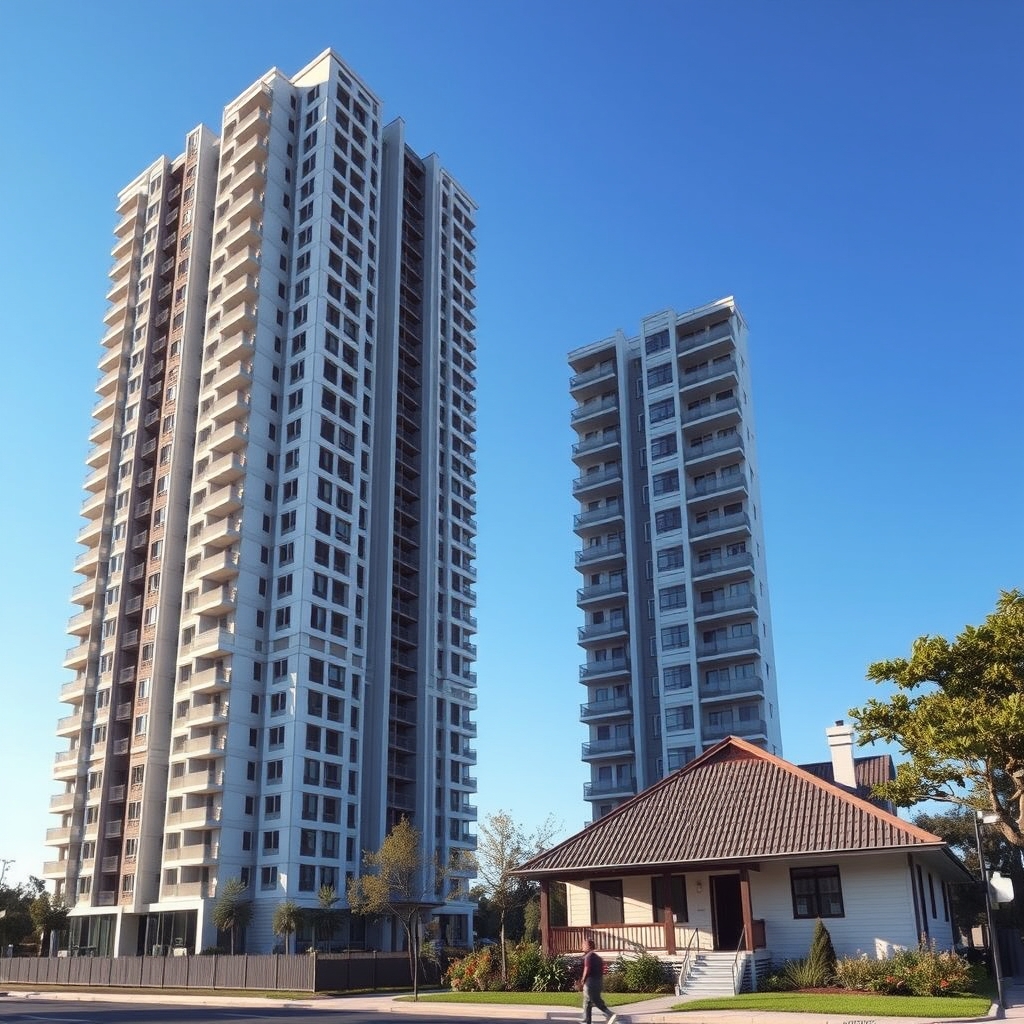
When comparing high-rise apartments vs independent houses for flat sharing, the decision often comes down to how much you value building amenities and security versus space and independence. Both formats are common across Indian cities, and each suits a different kind of flat-sharing lifestyle.
Why High-Rise Apartments Work Well for Flat Sharing
High-rise apartments typically come with a managed society structure: security guards, CCTV coverage, visitor logs, and sometimes a dedicated property manager. For flatmates, especially those new to a city, this added layer of security and accountability can be genuinely reassuring, since unknown visitors are tracked at the gate rather than left to individual flats to manage.
Amenities like a gym, clubhouse, or common terrace also mean flatmates have shared spaces outside the flat itself to unwind, which can ease tension in a home where multiple people are sharing close quarters. The trade-off is cost and rigidity — apartment societies often have stricter rules around guests, pets, or renovations, and rent tends to be higher for comparable space.
Why Independent Houses Appeal to Flat Sharers
Independent houses, especially those split into floors or portions, often offer more square footage for the same rent, along with greater flexibility — fewer society restrictions on guests, pets, or how you use the space. For larger flat-sharing groups, an independent house can also mean more privacy between individual rooms and shared areas.
The downside is security and maintenance. Independent houses typically don't have a dedicated security guard or CCTV network unless the landlord has specifically installed one, and any plumbing or electrical issue becomes the landlord's or tenants' direct responsibility to resolve, without a society maintenance team to call.
Comparing the Two Directly
The practical differences generally come down to these factors:
- Security: high-rise apartments usually offer managed security and visitor tracking; independent houses depend entirely on what the landlord has set up.
- Space for the rent: independent houses often provide more square footage per rupee than high-rises in the same locality.
- Amenities: apartment societies offer shared gyms, lifts, and common areas; independent houses rarely include these.
- Flexibility: independent houses typically have fewer restrictions on guests, pets, and minor modifications.
- Maintenance response: apartment societies often have a maintenance team on call; independent houses rely on direct landlord responsiveness.
Matching the Choice to Your Group's Needs
A group of working professionals who travel often and want low-maintenance security might lean toward a high-rise. A larger group of flatmates who want more space, a garden or terrace, and fewer restrictions on lifestyle might prefer an independent house. Either way, the safety of the actual flatmates you move in with matters just as much as the safety features of the building.
Pro tip: If choosing an independent house, ask the landlord directly about response time for repairs and whether there's any existing security arrangement — don't assume either is in place.
Why it matters: Building security features are only half the safety equation — knowing that your flatmates and the listing itself have been verified matters just as much as gated security or CCTV.
Landing on the Right Format
There's no single winner between high-rise apartments and independent houses — the right choice depends on your group's size, budget, and how much you value managed amenities versus space and flexibility. Whichever you pick, verify the property and your future flatmates before committing.
Ready to find your ideal flatmate? Join FlatmatesHub today and connect with KYC-verified roommates near you — completely free.