
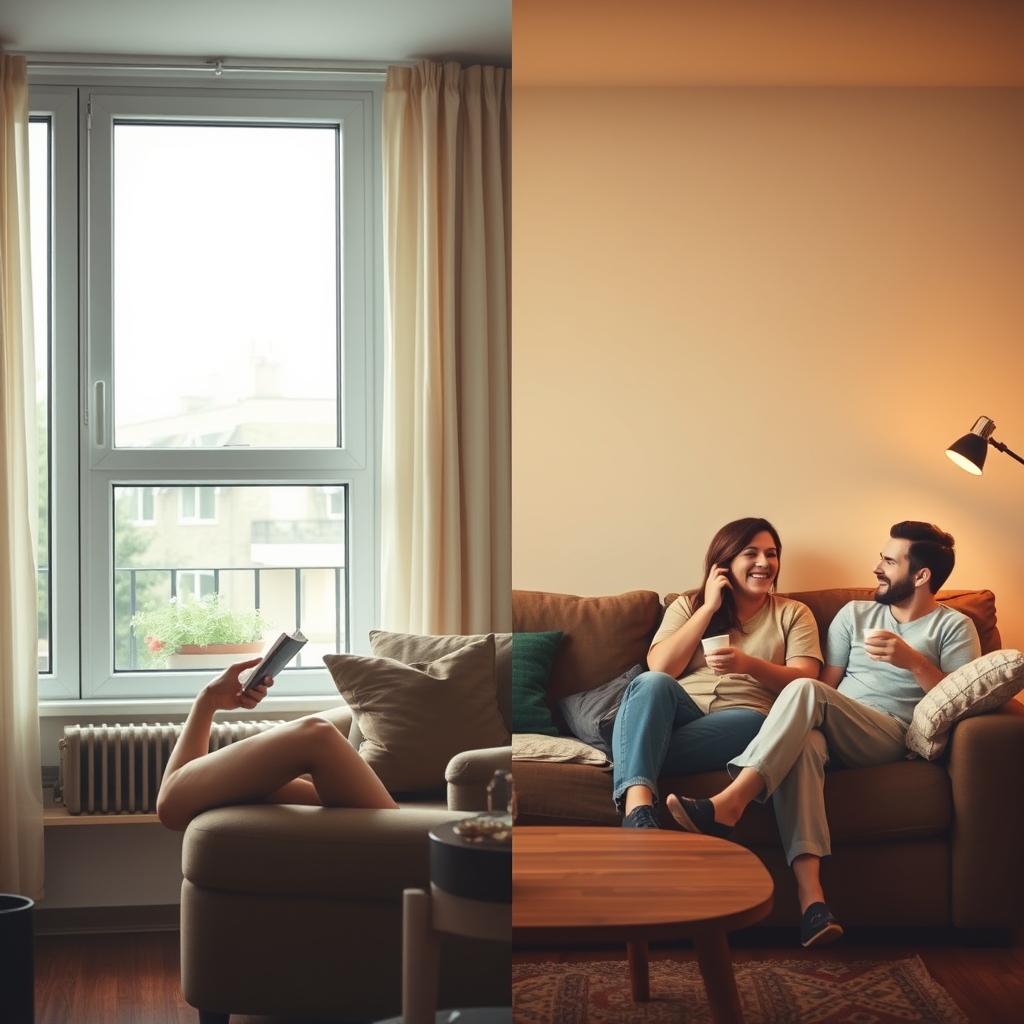
One flatmate wants a quiet evening with a book and early lights-out; the other wants friends over, music playing, and conversation late into the night. Bridging the gap between introverted and extroverted flatmates is one of the most common — and most solvable — challenges in shared living, once both sides understand it's a difference in energy, not a character flaw.
Introverted and Extroverted Flatmates: Two Different Needs
Introverted flatmates often recharge through solitude and quiet, while extroverted flatmates recharge through social interaction and activity. Neither preference is wrong, but left undiscussed, they can lead to an introvert feeling overwhelmed or an extrovert feeling shut out. The goal isn't for either person to change who they are — it's to build a home that has room for both energies.
Common Friction Points
- Frequency and timing of guests over at the flat
- Noise levels during work hours or late at night
- Expectations around joining group hangouts or outings
- Different needs for small talk versus comfortable silence
- Different recovery time needed after socializing
Practical Ways to Find Balance
Most successful mixed-personality households run on a simple principle: predictability. When both flatmates know roughly what to expect and when, it becomes much easier to plan around each other's needs without resentment building up.
- Agree on rough quiet hours and guest-friendly hours for the week
- Give a heads-up before having friends over, especially on weekdays
- Introverted flatmates can opt into social plans without obligation to attend every one
- Extroverted flatmates can plan gatherings outside the flat occasionally too
- Check in honestly if either side starts feeling overwhelmed or excluded
Pro tip: A simple “door open means come chat, door closed means I need quiet time” signal removes the guesswork and lets both introverted and extroverted flatmates respect each other's mode without an awkward conversation every time.
Why it matters: Households that set clear, predictable social norms report far less resentment between quieter and more social flatmates, because nobody has to guess what the other person needs.
Matching Compatible Energy Levels From the Start
While a mixed household can absolutely work, many people prefer starting with flatmates whose social energy is at least broadly compatible. FlatmatesHub's compatibility matching lets you indicate your lifestyle preferences — including how social or quiet you like your home to be — helping you find flatmates who are more naturally in sync with your rhythm.
Appreciating What Each Brings
Introverted flatmates often bring calm, thoughtful stability to a home, while extroverted flatmates bring energy and spontaneity. When both are respected, a shared home can offer the best of both — lively when you want company, peaceful when you need quiet.
A Home That Works for Every Personality
The households that handle this divide best are the ones where nobody has to constantly justify their preferences. An introvert shouldn't have to explain why they're skipping a gathering, and an extrovert shouldn't have to apologize for wanting company. Once that mutual acceptance is in place, the personality differences that once caused friction often become simply part of what makes the home feel balanced.
Ready to find your ideal flatmate? Join FlatmatesHub today and connect with KYC-verified roommates near you — completely free.